Patient stories

We at Day One continue to be excited about the potential opportunity that antibody-drug conjugates (ADCs) present for the development of new medicines for adults and children living with cancer. A number of ADCs are demonstrating activity as monotherapy and in combination with other cancer medicines, opening the possibility that new, impactful, and innovative therapies may become available for patients who have had no or limited options. Progress in the development of novel ADCs may help people of all ages fight cancers, which is why Mersana Therapeutics and its Emi-Le (Emiltatug Ledadotin) program is a strong and strategic fit for Day One. It is a significant step not only in our development of this modality but also in our mission to bring forward innovative therapies with transformative impact for patients that urgently need them.
Here’s why we are looking forward to this planned acquisition: Emi-Le is an innovative and differentiated ADC directed against B7-H4, a well-characterized target in aggressive cancers, including adenoid cystic carcinoma (ACC). ACC arises in the salivary gland and other glandular tissues including breast, trachea, lacrimal glands and skin. Currently, there are no approved therapies or standards of care for patients with ACC who do not respond to chemotherapy. The Phase 1 data for Emi-Le in ACC are encouraging, suggesting an opportunity for rapid development and pursuit of an accelerated approval and, if approved, commercialization. This is a path in which we have proven expertise with OJEMDA™ (tovorafenib).
ADCs are an increasing area of interest for us at Day One. Last year, we acquired DAY301, another potentially first-in-class medicine that targets protein tyrosine kinase 7 (PTK-7), which is highly expressed on the cell surface of multiple adult and pediatric cancers including platinum-resistant ovarian cancer, triple negative breast cancer, non-small cell lung cancer, neuroblastoma and osteosarcoma. DAY301 has been designed to optimize the therapeutic index and overcome limitations of previous-generation ADCs.
Accelerating new options for cancers without targeted treatments or standards of care is what brings us to work every day at Day One because we know our success here could change the lives of patients young and old. Our move to acquire Mersana is another step toward running faster and delivering efficiently. We’re looking forward to ‘day one’ with the Mersana team once the deal closes. I know we can work together to potentially get a novel medicine into the hands of the clinical care teams who work so hard to make an impact on the trajectory of the lives of adults and children living with rare, hard-to-treat cancers.
Additional Information and Where to Find It
The tender offer described in this communication (the Offer) has not yet commenced, and this communication is neither a recommendation, nor an offer to purchase nor a solicitation of an offer to sell any shares of the common stock of Mersana Therapeutics, Inc. (Mersana) or any other securities. On the commencement date of the Offer, a tender offer statement on Schedule TO, including an Offer to Purchase, a Letter of Transmittal and related documents, will be filed with the U.S. Securities and Exchange Commission (SEC) by Day One Biopharmaceuticals, Inc. (Day One) and Emerald Merger Sub, Inc., and a Solicitation/Recommendation Statement on Schedule 14D-9 will be filed with the SEC by Mersana. The offer to purchase shares of Mersana common stock will only be made pursuant to the Offer to Purchase, the Letter of Transmittal and related documents filed as a part of the Schedule TO. INVESTORS AND SECURITY HOLDERS ARE URGED TO READ BOTH THE TENDER OFFER STATEMENT AND THE SOLICITATION/RECOMMENDATION STATEMENT REGARDING THE OFFER, AS THEY MAY BE AMENDED OR SUPPLEMENTED FROM TIME TO TIME, WHEN THEY BECOME AVAILABLE BECAUSE THEY WILL CONTAIN IMPORTANT INFORMATION THAT INVESTORS AND SECURITY HOLDERS SHOULD CONSIDER BEFORE MAKING ANY DECISION REGARDING TENDERING THEIR COMMON STOCK, INCLUDING THE TERMS AND CONDITIONS OF THE TENDER OFFER. Investors and security holders may obtain a free copy of these statements (when available) and other documents filed with the SEC at Day One’s website at ir.dayonebio.com and (once they become available) will be mailed to the stockholders of Mersana free of charge. The information contained in, or that can be accessed through, Day One’s website is not a part of, or incorporated by reference in, this filing. The tender offer materials (including the Offer to Purchase and the related Letter of Transmittal), as well as the Solicitation/Recommendation Statement, will also be made available for free on the SEC’s website at www.sec.gov. In addition to the Offer to Purchase, the related Letter of Transmittal and certain other tender offer documents, as well as the Solicitation/Recommendation Statement, Day One and Mersana file annual, quarterly and current reports, proxy statements and other information with the SEC. You may read any reports, statements or other information filed by Mersana and Day One with the SEC for free on the SEC’s website at www.sec.gov.
Cautionary Note Regarding Forward-Looking Statements
This communication contains forward-looking statements. Forward-looking statements are generally identified by the words “expects”, “anticipates”, “believes”, “intends”, “estimates”, “plans”, “will”, “goal” and similar expressions. These forward-looking statements include, without limitation, statements related to the anticipated consummation of the acquisition of Mersana and the expected benefits therefrom; and other statements that are not historical facts. These forward-looking statements are based on Day One’s current expectations and inherently involve significant risks and uncertainties. Actual results and the timing of events could differ materially from those anticipated in such forward-looking statements as a result of these risks and uncertainties, which include, without limitation, risks related to Day One’s ability to complete the transaction on the proposed terms and schedule, or at all; whether the various conditions to the consummation of the transaction under the merger agreement will be satisfied or waived; whether stockholders of Mersana tender sufficient shares in the transaction; the occurrence of any event, change or other circumstance that could give rise to the termination of the merger agreement; the outcome of legal proceedings that may be instituted against Day One, Mersana and/or others relating to the transaction and the risk that such legal proceedings may result in significant costs of defense, indemnification and liability; the failure (or delay) to receive the required regulatory approvals relating to the transaction; the possibility that competing offers will be made; disruption from the proposed transaction, making it more difficult to conduct business as usual or maintain relationships with customers, employees or suppliers; the risk that Day One will not be able to retain the employees of Mersana following the closing of the transaction given the at-will nature of their employment; risks associated with acquisitions, such as the risk that the businesses will not be integrated successfully, that such integration may be more difficult, time-consuming or costly than expected or that the expected benefits of the transaction will not occur; risks associated with developing product candidates; risks and uncertainties related to unforeseen delays that may impact the timing of clinical trials and reporting data; risks related to future opportunities and plans for Mersana and its product candidates, including uncertainty of the expected financial performance of Mersana and its product candidates and the possibility that the milestone payments related to the contingent value right will never be achieved and that no milestone payment may be made; the possibility that if Day One does not achieve the perceived benefits of the proposed transaction as rapidly or to the extent anticipated by financial analysts or investors, the market price of Day One’s shares could decline; as well as other risks related to Day One’s and Mersana’s businesses detailed from time-to-time under the caption “Risk Factors” and elsewhere in Day One’s and Mersana’s respective SEC filings and reports, including their respective Annual Reports on Form 10-K for the year ended December 31, 2024 and subsequent quarterly and current reports filed with the SEC. Day One undertakes no duty or obligation to update any forward-looking statements contained in this communication as a result of new information, future events or changes in their expectations, except as required by law.
Recently, the National Cancer Institute (NCI) announced it would end its funding of the Pediatric Brain Tumor Consortium (PBTC), a leading clinical trial network at the forefront of developing new therapies and technologies for pediatric brain tumors. While the NCI’s transition plan calls for shifting PBTC’s work to a broader, early-phase network covering all pediatric cancers, the move will almost certainly delay discovery and development of new treatments in an already underserved area of medical need.
Just ask the parents of the thousands of children and adolescents with brain tumors who are diagnosed each year, many of whom have limited time remaining to spend with their children due to the lack of effective therapies.
Cancer remains the number one killer of children and young people by disease in the U.S., and brain tumors account for about one out of four childhood cancers. Today, many pediatric cancers are often treated with the same chemotherapies that have been used for decades and that too often simply don’t work.
As two people who have together spent many decades trying to make a difference for cancer patients – one as an industry executive and the other as the father of a son with a malignant brain tumor and a patient advocate – we have seen first-hand how the lack of new medicines impacts children battling brain tumors and their families. Many of these children never get the chance to grow up.
Defunding the PBTC would not only slow the development of new therapies for pediatric brain tumors, it would also dismantle a collaborative, specialized network of researchers who mentor the next generation of clinical trialists. The loss of this infrastructure would weaken both the innovation and the pipeline of expertise that children with brain tumors urgently depend on. The decision to defund the PBTC will dismantle clinical trial infrastructure and brain tumor research expertise that have taken many years to build and that are not easily transferred to another network with different expertise, different capabilities and, most importantly, competing priorities. This type of systemic issue continues to result in the defunding of rare diseases and creates a disincentive for critically needed new and future researchers to get into this field.
It is no surprise that defunding the PBTC has alarmed scientists, industry, cancer patient advocates, doctors, kids with brain tumors, and their families. One bereaved mother and patient-family advocate for PBTC has said, “I am alarmed and heartbroken by the NCI’s decision… When NCI support ends, so too will a critical lifeline for children diagnosed with brain tumors… For families like mine, the PBTC has represented hope. To see that hope taken away… feels like a devastating step backward.”
The pediatric brain tumor community is a tight-knit group united by a shared commitment to a future in which new innovative, targeted medicines are developed and promptly get into the hands of doctors and patients who need them. Collaboration and steady funding for organizations like PBTC—built to tackle the toughest brain tumors—are essential to advancing new discoveries and novel medicines focused on finding cures.
We ask that policymakers act quickly to restore or replace PBTC funding. We’ve already seen all PBTC trials at member hospitals forced to pause clinical study enrollment, leaving patients and their families with no alternative treatment options left to try. Finally, access must be protected so all children with brain tumors, regardless of what part of the country they live in, can benefit from trials and potential breakthroughs. Kids with brain tumors and their families deserve the resources to accelerate progress.
Day One recently screened a new documentary film called Seeing a Different Future. It tells the remarkable story of kids with cancer, their parents and doctors, academic researchers and drug developers who, together, persisted on a long and winding road to advance a treatment for a common brain tumor to a patient population who desperately needed it. Even after 25 years in the biopharmaceutical industry and 35 years as a physician, investigator and drug developer, I am inspired by the tenacity and commitment of our community to make a real difference in the lives of children with cancer and their families who usually wait too many years for new medicines that make a difference.
Which is one of the reasons I’ve joined Day One. I am excited to be part of an organization that has translated its passion for patients into developing meaningful medicines for patients who, let’s face it, have been at the back of the line for far too long.
My career as a hematologist/oncologist began at a time when “white space” constituted the treatment paradigms for most cancers, meaning effective treatments were either inferior to the task at hand, or often non-existent. Fortunately, through substantial public and private investment, discovery innovation, commitment, passion, and fortitude, the treatment landscape for many diagnosed with cancer today is vastly different than the early 1990s. Today, not only do we address screening, diagnosis, and treatment, but we now include post-treatment survivorship in our lexicon with patients, their families and caregivers. That’s progress!
But there’s so much more progress to be realized. The whole notion of cancer screening is being revolutionized through genomic-based testing. Diagnosis is increasingly sophisticated to inform recommendations for targeted therapies; we are now regularly parsing a histologic diagnosis to the specific molecular-defined subset in order to tailor a patient’s treatment accordingly. In parallel, either through precision medicine, or simply better medicines, or both, short and long term treatment side effects have lessened. While the immediate past three decades of advancement on each of these fronts may feel to some like a long time for too little, I am energized about the outlook for the future when I consider the three decades that preceded them, and the three before that. Think about it: nearly one hundred years ago, in addition to hope and prayers, our routine cancer armamentarium existed solely in the hands of our surgical colleagues, and only anecdotal success was achieved. Now, through improving screening and multimodality cancer treatment, we’re winning, as evidenced by a steady, year-over-year decline in cancer mortality in the United States since the turn of the century.
My years as a physician scientist have taught me how to meet the challenges of a cancer diagnosis, whether the patient is a child or an adult, employing the tenets of the scientific method, optimal clinical acumen informed by careful listening and observation, and a large dose of empathy. These tenets also drive my approach in the biopharmaceutical industry.
As an industry, we strive to make a meaningful difference in the lives of patients, keeping them at the center of everything we do. When we succeed, patients, families, doctors, investors, and society win. However, how we do so matters. In addition to the tenets above, a physician’s professional ethos of Primum non nocere, or “first, do no harm,” is equally crucial. It’s a simple phrase, with profound impact, whether in the clinic, on the wards, or in the work we do at places like Day One. If it’s adhered to in an inviolate manner, we will always stand on firm ground. Across our industry, whether a physician is in the midst of a particular organization, or not, keeping the patient at the center, acting with empathy to test our hypotheses, and doing so as keen observers and listeners with the mantra to first do no harm is a foundational recipe for immeasurable success.
People of all ages with cancer need the ongoing, relentless efforts of our entire community. And I firmly believe our fate is absolutely in our hands, which I find compelling and reinforcing to the sense of urgency and the criticality of our mission. I see this commitment to boldness and ingenuity at Day One. Every day that we ‘flip the script’ on traditional drug development gets us closer to delivering solutions to patients of all ages and their dedicated doctors for both rare and more common cancers. We also have what it takes to finally meet with equal intensity the long-standing challenges of developing medicines for children and adults.
When I think about what success looks like, it is a vision in which the impact is driven by the talent and leadership of absolutely everyone in this field, and the resilience of every child and adult with cancer and their families. As Seeing a Different Future shows, this is a journey of unleashing potential, and the journey is well underway.
Our CEO Jeremy Bender recently had the pleasure of joining Biotech2050 to reflect on the journey we’ve been on at Day One Biopharmaceuticals—from a bold vision to prioritize pediatric oncology, to launching our first FDA-approved medicine. Jeremy discussed what it’s been like stepping into the CEO role for the first time, and lessons around leadership, focus, and staying true to your mission.
Listen to hear more about how small biotechs can drive big impact and best practices for leading a resilient organization through uncertain times. Thank you to Rahul Chaturvedi for the thought-provoking conversation around growth and innovation.
Last month, I read an article in the New York Times about a regimen generated with the help of AI using a drug that was repurposed to treat a rare and aggressive blood disorder called POEMS syndrome in a patient who had been battling the disease for a year. This was a last-ditch effort – he had already been asked to choose where he wanted to die – at home or in the hospital. According to the article, within a week of the new regimen, the patient showed a positive response, and within months he was in remission.
The article stayed with me, not just because of the promising outcome for this patient, and potentially others, but also because of its similarity to our start at Day One Biopharmaceuticals. We were founded to address the lack of new therapies for children with cancer that have resulted from traditional drug development efforts. Children with cancer and their families wait for years for new, life-changing treatments. As Day One was getting off the ground in 2019, Takeda had decided to cease development of tovorafenib (previously known as TAK-580 at Takeda and MLN2480 at its original developer, Millenium) in adults cancer patients. Fortuitously, champions for pediatric cancer within Takeda convinced their leadership to out-license the drug to a new biotech company interested and qualified to move the program forward. That company was Day One. Four years later, in April 2024, we received FDA approval for children with relapsed or refractory pediatric low-grade glioma (pLGG).
Discovering new applications for sometimes decades-old, mature drugs isn’t new. Indeed, it has been an important area of work for certain patient populations for many years. Look no further than the storied history of thalidomide, now being used for the treatment of multiple myeloma, and propranolol which is being investigated for its use in angiosarcoma.
As we all know, the need for new, targeted therapies for cancers and other rare diseases remains urgent. This is especially true in pediatric oncology, where there has long been an innovation gap.
Our first commercial product has been foundational for Day One’s growth and has enabled us to do more for patients and their treating physicians who urgently need new therapies. We would not be in the position we are today to identify and advance new programs that have best-or first-in-class potential as new medicines had it not been for the long and windy path tovorafenib traveled over the course of many years.
We’re using what we call a Search & Develop (S&D) strategy with the goal of making a real difference in the treatment of the right patients at the right time. This can be applied to the development of previously shelved agents or novel targeted agents. An example is our recent acquisition of DAY301, a potential first-in-class Antibody Drug Conjugate (ADC) that may have broad applicability in adult and pediatric solid tumors. A Phase 1 trial of DAY301 in patients started earlier this year.
Can our S&D strategy get new medicines into the hands of kids and adults with rare, hard to treat cancers faster? Given drug research costs are projected to continue rising and the average cost of bringing a new drug to market is estimated at $1.3B driven by factors including increased trial complexity and challenging research areas, our approach is certainly a practical one.
I am inspired by Dr. Fajgenbaum and his team at the University of Pennsylvania who were behind the innovative approach regimen that saved the patient’s life discussed in the NYT. I look forward to sharing more stories like this in the near future, including drugs that we are developing at Day One that will hopefully change the life trajectories of both pediatric and adult patients.
By Dr. Jeremy Bender, CEO
As we kick off 2025, Day One’s CEO Jeremy Bender took the stage at this year’s J.P. Morgan Healthcare Conference to reflect on the Company’s remarkable journey and to unveil our vision for the future. He highlighted the significant progress we’ve made, shared the exciting opportunities that lie ahead, and emphasized how we are poised to deliver life-changing medicines to patients faster, bolder, and with greater impact.

What began with inspiration driven by the urgent needs of children impacted by cancer, has in just six years, transformed Day One into a commercial-stage company with the FDA approval of our first commercial medicine, OJEMDA™ (tovorafenib). Our top priority in 2025 is to help even more patients impacted by a pediatric low-grade glioma (pLGG) diagnosis by increasing the breadth and depth of prescribers, establishing OJEMDA as the standard of care in the second-line setting, ensuring broader patient access, and working to make this treatment available to patients beyond the U.S. through our global partnership with Ipsen.
Driven by our dedication to patients, we’ve also made significant advancements in our pipeline, including progressing the global Phase 3 FIREFLY-2 trial of OJEMDA in front-line pLGG, which we expect to fully enroll in the first half of 2026. Additionally, our DAY301 program, a clinical-stage Antibody Drug Conjugate (ADC) targeting PTK7 in solid tumors for both adult and pediatric cancers, has just cleared the first cohort in the Phase 1a portion of the Phase 1a/b clinical trial. This ADC is designed to maximize the therapeutic window and has the potential to become a first-in-class option in addressing unmet needs in cancer care.
Finally, we will continue to invest in opportunities focused on targeted therapies that have the potential to have a substantive impact over existing medicines in the oncology space. Our achievements to date are a testament to the team’s deep expertise in oncology as well as our ability to identify and acquire high-potential programs. As we continue this journey, we are focused on ensuring that patients of all ages can look ahead from “Day One” to the future they’ve always envisioned.
To learn more about Day One’s vision for 2025 and beyond, as well as key highlights from JPM 2025, click here.
When Bradon was diagnosed with a brain tumor at 11 years old, “it felt like the answer to years of subtle concerns”, said his mother, Anna. As a child, his development always lagged slightly behind what seemed normal, but doctors reassured them that everything was fine. One weekend, the signs became too glaring to ignore. He kept falling and tripping, and when his school gave him an elevator pass because he was unstable climbing the stairs, Anna knew it was time to see a doctor.
Bradon couldn’t walk on his tiptoes or heels properly, and the questions from the medical team became more unsettling. A few days after an MRI, they got the diagnosis: Bradon had a brain tumor. A pediatric low-grade glioma (pLGG), at the base of his brainstem and extending into his cervical spine, was the culprit. “It was devastating, but in a way, it explained everything – his clumsiness, delayed development, even the subtle slope of his shoulder. All the little signs we had dismissed now made sense,” Anna recalls.
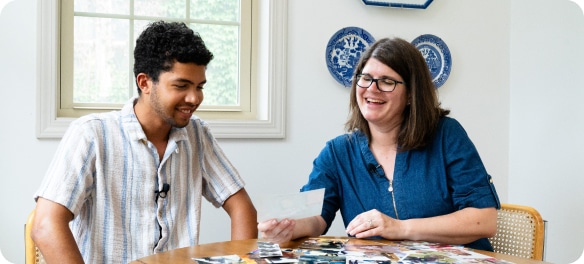
The weight of the news was overwhelming and the numbness she felt didn’t fade quickly. Anna remembers, “I couldn’t cry at home or in front of my kids,” she recalled. “I’d pull over in a Walmart parking lot, let it all out, and then pull myself together for the day.”
At first, Anna thought that the next steps would be straightforward: surgery to remove the tumor, and then life would go back to normal. She even considered attending a work trip soon after the procedure. But the reality hit hard: the journey wasn’t just surgery—it was radiation, chemotherapy, and the lingering side effects and uncertainty that would stretch across years. A turning point in the journey was finding an online support group. For Anna, the group became a lifeline. It gave her a place to share Bradon’s story, ask questions, and connect with other parents who had been down the same road. “It saved my sanity,” Anna said. “Their insights, whether confirming a symptom or urging me to call a doctor – were invaluable.”
One of the most frustrating parts of Bradon’s diagnosis was the misunderstanding surrounding pediatric low-grade gliomas. “People would say, ‘At least it’s not cancer,’ as if it wasn’t dangerous,” Anna recalled. “But it is cancer. Just because it grows slowly doesn’t make it any less threatening—it’s still inside his brain, affecting critical areas like the brainstem.” She was frustrated by how easily others dismissed it as “just a low-grade glioma,” not recognizing the emotional and medical challenges that come with it. “All childhood tumors are terrifying; they all change a child’s life in profound ways.”
Even now, years later, the fear hasn’t entirely left, and Anna still finds herself struggling to let go as Bradon is learning to navigate adulthood with pLGG on his own. Whenever Bradon returns home and she sees him struggle to tie his shoes or stumbles, she immediately jumps in. “It’s hard not to fall back into that hyper-protective mode, but I know this separation is necessary for both of us”.
Even after two years of stability and improvement for Bradon, each annual scan brings the same questions for Anna: Is it stable? Has anything changed? Are we good for another year? The waiting never gets easier.
“In the beginning, the frequent scans were comforting. Someone was always watching closely. But as the intervals stretched to six months, then nine, and now a year, it became harder to adjust. Eventually, he’ll go to the appointments on his own, and I’ll just get a phone call.” She smiled, imagining him saying, “It’s fine, Mom.” But she knows she’ll have a dozen follow-up questions he won’t think to ask.
At just 11 years old, Nora is bursting with energy and ambition. Ask her what she wants to be when she grows up, and she’ll give you a list as impressive as it is diverse: a singer, an actor, a teacher, a therapist for kids who’ve gone through what she has, or maybe even president. This spark and determination shine through in everything Nora does, whether she’s acting, singing, hanging out with friends, or her mom Heather, whom she calls her biggest supporter.
Four years ago, Nora’s life took an unexpected turn while on vacation with her family in Shohola, Pennsylvania. Sitting by the lake with her grandma, reading The Black Stallion, she told her grandma she couldn’t see the words on the page. Soon after, Nora complained that she couldn’t read the lyrics during her piano lesson, even with her mom’s glasses. That’s when Heather rushed their family home to Manhattan for a doctor’s appointment.

With one MRI, their family’s life was turned upside down. The doctors told Nora she had a “bump in her brain,” which was in fact the most common type of brain tumor diagnosed in children, called a pediatric low-grade glioma or pLGG.
Nora quickly learned the ins and outs of having a brain tumor. She faced frequent MRIs, EKGs, eye appointments, and blood tests—sometimes all in one day. To make it more bearable, she and her mom came up with a song for MRI day: It’s MRI day, it’s not my day, but if I had my way, it would be pie day. Now, every MRI day ends with pie, her favorite being her mom’s homemade chocolate cream pie. “It tastes amazing,” she says, savoring the memory of turning a difficult day into something special.
Throughout her two-year treatment journey, Nora faced many challenges, including adjusting to life with severely impaired vision as a result of the tumor’s pressure on her optic nerve. Despite all this, she never lost her sense of humor or determination. Nora recalls, “since the beginning, I was like, I’m gonna prove them wrong. I’m gonna get through this. And after two years of MRIs, blood draws, doctor’s appointments, EKGs, Echoes, taking pills every night and every morning…I’m like look at me now. I did it.” At this point, Nora’s vision is “a lot better” as she has gained most of it back and is able to wear glasses that are really helping.
Through it all, Nora was surrounded by love and support, from her “doctor crew”, family, and from her friends. They were always there to wish her luck and cheer her on, but what meant the most to Nora was that they didn’t treat her any differently. “I didn’t want to be known as ‘the friend who had cancer,’” she explains. “I just wanted to be Nora, their cheerful friend.”
Her family, especially her mom, played a huge role in her journey. From helping her learn how to take pills to making MRI days less frightening, Nora’s mom was by her side every step of the way. Now that she’s come through her treatment, Nora has some advice for other kids going through similar challenges. “Before I say it’s going to be okay, I would just listen to what they want to tell me,” she says thoughtfully. “And if they want feedback, I’d tell them, ‘You got this. You’re a warrior. It’s going to be tough, but there will be people who help you along the way.’”